





Webinars




Presented by
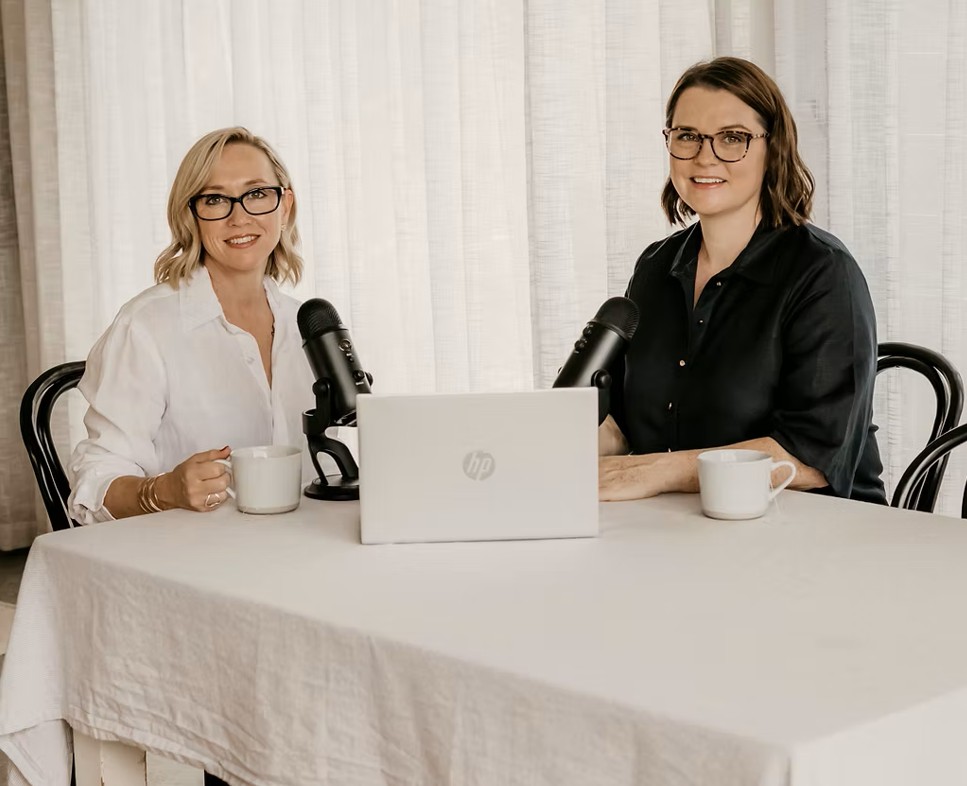
Lisa Lucas: Founder & CEO
Muireann Wynne: Founder & Mentor
We’ve teamed up with the Nurses for Nurses Network to offer a series of free webinars designed to help you earn Continuing Professional Development (CPD) points while enhancing your non-clinical expertise.
These sessions focus on vital professional skills such as leadership, communication, and career advancement, empowering you to grow beyond the bedside and take the next step in your nursing journey.
Access our free webinars below and start building your future today.
Webinars Available On-Demand
Mastering Interview Preparation
This presentation will guide participants through a structured process to maximize their chances of success in any interview setting.
Attendees will learn how to conduct effective research on the Health Service, unit and role, to demonstrate informed enthusiasm.
CPD Hours = 0.5

3 Realities Nurses Navigate & How To Cope
In this webinar, we explore the three biggest challenges nurses are facing right now - unsustainable workloads, emotional burnout, and feeling stuck in their careers.
You'll walk away with practical strategies to manage pressure, protect your wellbeing, and take confident steps toward a more balanced and fulfilling nursing journey.
CPD Hours = 0.5
Navigating Difficult Conversations With Confidence
In this webinar, participants will explore what makes conversations difficult and how to strategically frame discussions to foster understanding and resolution.
We will examine common mistakes and provide actionable strategies to avoid them.
CPD Hours = 0.5

Partners

Highlights From The Blog

Clinical Intuition in Nursing: What It Is, How It Develops, and Why It Belongs in Your Portfolio
The Thing Experienced Nurses Know That They Cannot Always Explain
Every experienced nurse has had this experience: a patient who looks fine by every measurable parameter, but something is wrong. A clinical presentation that reads as routine, but the nurse stays. A moment of certainty about a patient’s trajectory that precedes the objective data that would explain it.
This is not imagination. It is not unprofessional. It is one of the most sophisticated and most undervalued competencies in clinical nursing — and it has a name, a mechanism, and a substantial research base.
|
When an experienced nurse says, ‘I just knew’, they are not describing a feeling. They are describing a pattern-matching process so rapid and so well-trained that it produces certainty before it produces explanation.
What Clinical Intuition in Nursing Actually Is
Clinical intuition in nursing has been researched extensively since Patricia Benner’s foundational work in the 1980s on novice-to-expert clinical development. It is now understood as a form of expert pattern recognition — the ability to rapidly identify clinical situations as instances of known patterns, without the conscious step-by-step processing that novice nurses use.
The mechanism is well-established in cognitive science: the brain stores thousands of clinical encounters as patterns. When a new patient presentation activates features consistent with a stored pattern — not matching it exactly, but resonating — the brain produces a sense of knowing before the explicit reasoning process has completed.
This is not the same as guessing. It is experienced pattern matching. And it is consistently accurate at rates that explicit reasoning in real-time clinical settings cannot match, for experienced practitioners.
How Clinical Intuition Develops in Nurses
Volume of Clinical Exposure
Clinical intuition develops through cumulative patient exposure — specifically, through encounters that are rich enough in detail that patterns are laid down with sufficient specificity to be useful. Hospital nursing, despite its pressures, produces rapid pattern development through the sheer density and diversity of clinical presentations.
Reflective Processing of Clinical Encounters
Volume alone is not sufficient. Nurses who reflect on clinical encounters — particularly ones where outcomes surprised them, or where their intuition was confirmed or disconfirmed by subsequent data — develop pattern libraries that are more refined and more reliable.
Cross-Specialty Clinical Experience
Nurses with experience across multiple clinical settings and patient populations develop broader pattern libraries and more flexible intuition than deeply siloed specialists. The nurse who has worked medical, surgical, and emergency settings brings a comparative database that enriches pattern recognition across contexts.
The Relationship Between Clinical Intuition and Evidence-Based Practice
Clinical intuition is not an alternative to evidence-based practice. It is evidence-based practice operating at a different speed. The pattern the experienced nurse is matching was built from real clinical outcomes — from encounters where the pattern was present and the outcome confirmed or disconfirmed its significance.
The appropriate relationship between intuition and evidence in clinical practice is: intuitive knowing warrants investigation, not automatic action. When something tells you a patient is deteriorating, you investigate. The feeling is data. It warrants data collection.
Why Clinical Intuition Belongs in Your Nursing Portfolio
Most nurses describe their clinical expertise in terms that are easily measurable: qualifications, years of experience, skills certificates, procedural competencies. Clinical intuition — one of the competencies that most clearly distinguishes an experienced nurse from a skilled new graduate — is almost never articulated in professional portfolios or career narratives.
Communicating clinical intuition in a portfolio or interview does not mean using the word ‘intuition’ — it means describing specific clinical experiences where advanced pattern recognition produced outcomes that explicit assessment alone would not have.
Example: ‘I identified a patient’s early deterioration during a routine observation round, despite normal vital signs, based on subtle changes in color, affect, and respiratory pattern that I recognized as consistent with impending sepsis. The subsequent assessment and escalation prevented an ICU transfer.’ This is clinical intuition described in portfolio language.
Frequently Asked Questions
Is clinical intuition reliable enough to act on?
Experienced clinical intuition is reliable enough to warrant investigation, escalation, and increased monitoring. It is not reliable enough to justify clinical action without supporting objective assessment. The appropriate response to strong clinical intuition is enhanced assessment — not bypass of standard clinical protocols.
Do some nurses develop clinical intuition faster than others?
Yes. The rate of clinical intuition development is affected by volume and diversity of clinical exposure, quality of reflection on clinical encounters, quality of supervision and feedback during formative years, and the degree to which the nurse actively attends to clinical subtleties rather than focusing only on measurable parameters.
How do I talk about clinical intuition in a job interview without sounding unscientific?
Frame it as expert pattern recognition and describe a specific clinical instance. ‘I have developed strong clinical early warning recognition through extensive acute care experience — I am often able to identify subtle deterioration before it becomes measurable’ is both accurate and professionally appropriate.


The Hive Nursing Development © 2026 | About Us | Contact Us | Privacy Policy | Terms & Conditions