





Welcome to The Hive Experience, where nurses come to recharge, reconnect, and reignite their passion.
We specialise in immersive retreats and professional events designed exclusively for nurses and midwives.
Whether you're seeking rest, reflection, or career rejuvenation, we create spaces that nourish your wellbeing and elevate your professional journey.
As the sister company to The Hive Nursing Development, we combine decades of clinical leadership, mentoring expertise, and a deep love for the profession to deliver unforgettable, CPD-accredited experiences with purpose.
Burnout prevention
Career clarity
Reflective wellness
CPD hours
Join a movement that celebrates, supports, and uplifts the heart of healthcare, you.


What we offer
Career Clarity
Gain fresh perspective, mentorship, and guided activities to help you reflect on your goals, map your next steps, and leave with a personalised plan to grow your nursing career with purpose.
Burnout Prevention
Our events are designed to help you pause, reset, and reconnect with yourself — reducing stress and providing practical strategies to prevent burnout and build sustainable wellbeing in your nursing career.
CPD Hours
All of our retreats and events are CPD-recognised, giving you the opportunity to invest in your personal and professional growth while meeting AHPRA requirements.
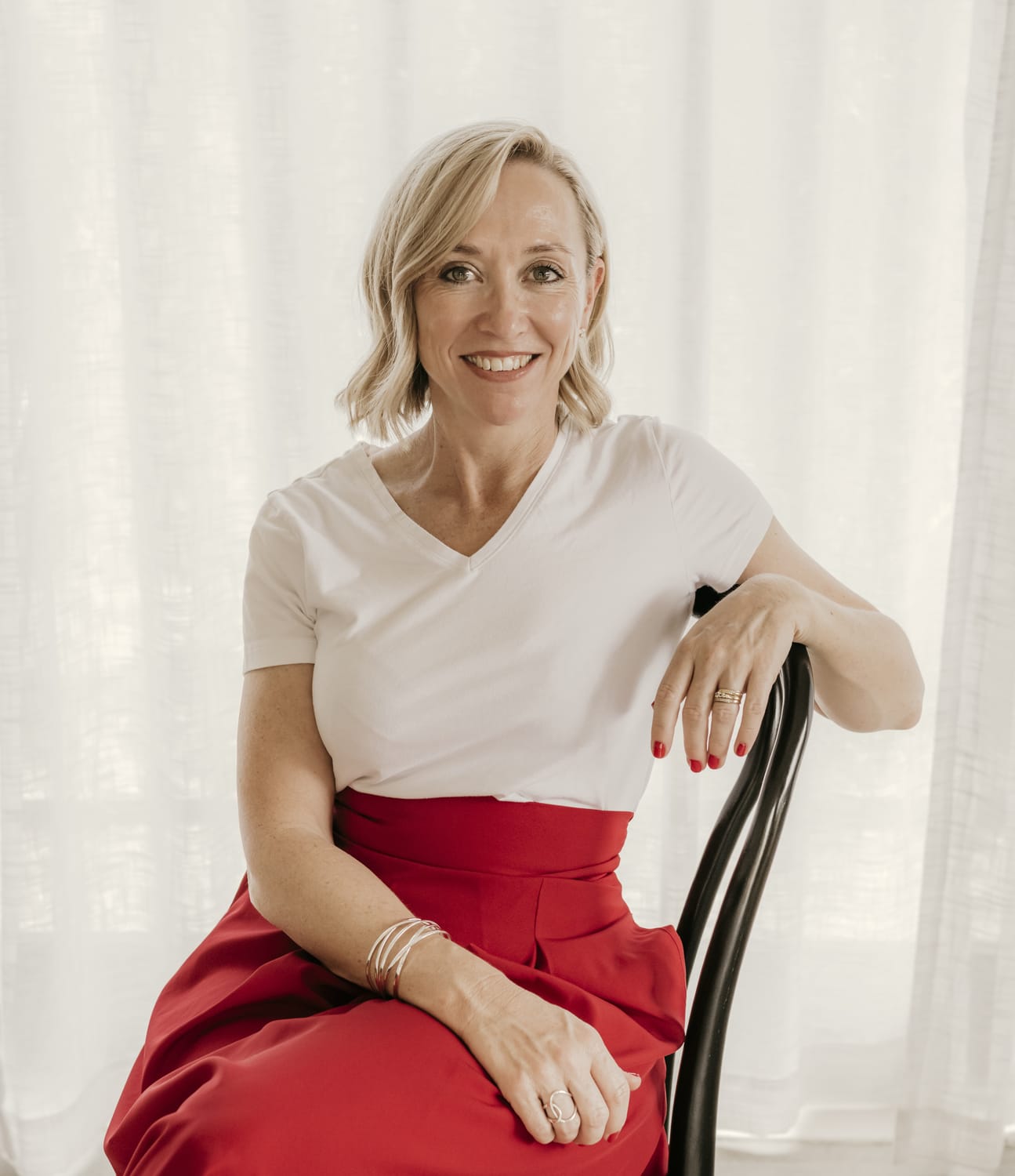
Presented by Lisa Lucas
Founder & CEO @ The Hive Nursing Development
Lisa is an award-winning nurse leader and the visionary behind The Hive Experience and The Hive Development.
With over 20 years of experience across emergency, surgical, oncology, cardiology, and retrieval services, Lisa brings deep insight and compassion to her work.
A passionate mentor and former Nursing Executive level leader, Lisa created Recharge & Refocus to help nurses align their careers with purpose, prevent burnout, and step into leadership with clarity and confidence.
Our Retreats
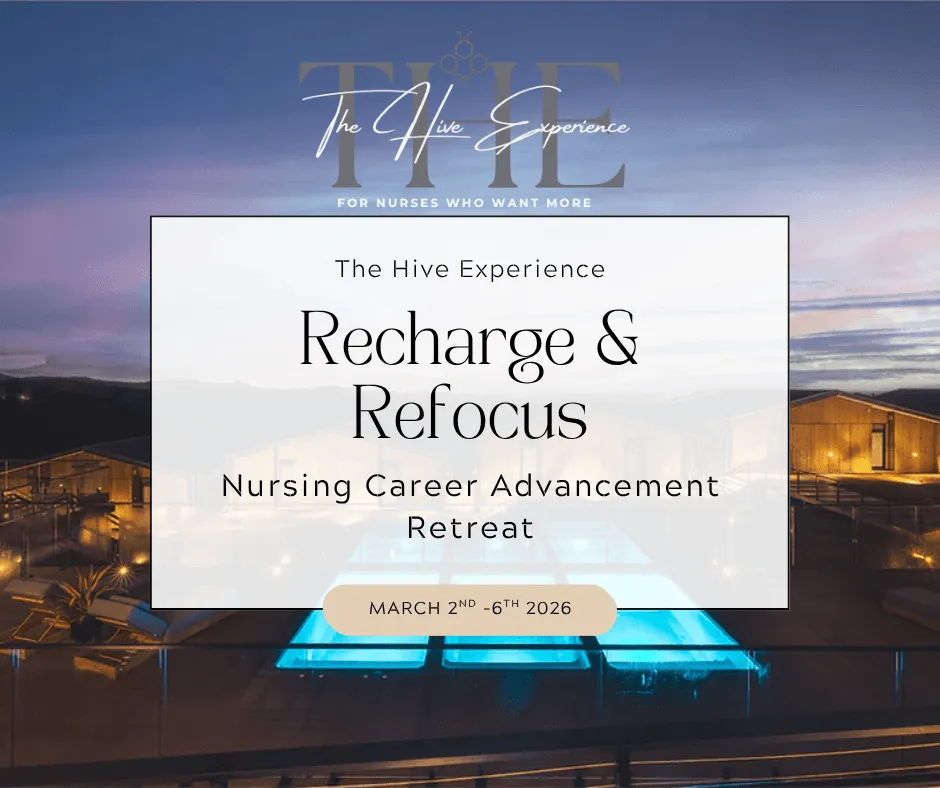
Reset & Refocus - Tallebudgerra QLD
An all-inclusive retreat for nurses and midwives seeking rest, clarity and career growth.
Includes:
5 days / 4 nights luxury accommodation at Eco Retreat, Tallebudgera
All meals crafted by an on-site executive chef (incl. dietary needs)
Full retreat program facilitated by award-winning nurse leaders
Personalised career planning & recruitment preparation workshops
Reflective wellness sessions including:
Guided yoga
Hot & cold plunge therapy
Sauna access
Scenic nature walks
Access to a fully equipped gym
24 CPD hours (AHPRA compliant)
Access to exclusive career resources & take-home workbook
Networking dinners and guest speaker sessions
Retreat gift pack
Follow-up group coaching call
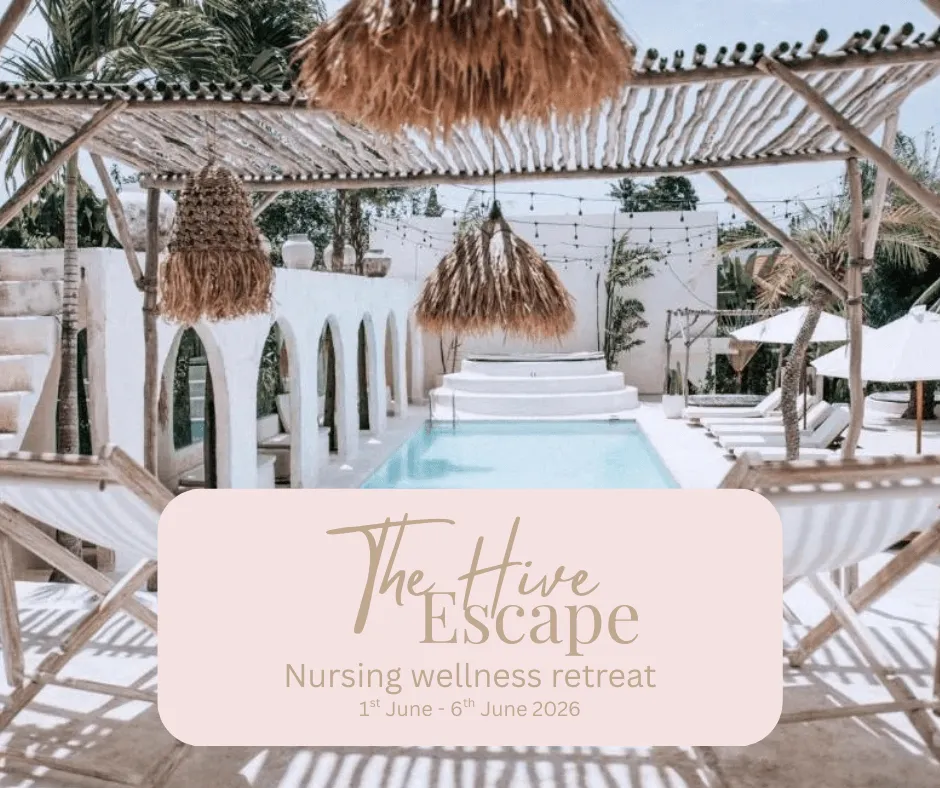
The Hive Escape - Bali
An all-inclusive luxury retreat for nurses and midwives seeking deep rest, emotional recovery and sustainable wellbeing.
5 nights luxury accommodation at Hotel Sages, Bali
Daily yoga and mindfulness sessions
A Bali Spa treatment to relax
Nurse-led wellbeing workshops
Daily nourishing meals (all dietary needs catered)
Cultural immersion experiences
Private airport transfers and on-site coordination
The Hive Cambodia
An all-inclusive Leadership immersive experience that combines humanitarian work with leadership development.
9 nights 5 star luxury accommodation
Volunteer house build with our partners Global Transition
Foundation, to build a house for local families
International flights
Award winning Nurse leader facilitated workshops / immersive sessions
Daily breakfast
Cultural immersion experiences
Private airport transfers

Other events from The Hive Experience...
Career Alignment & Advancement Program
Build clarity, confidence, and a grounded path forward.
2nd March - 5th March (9am - 5pm daily)
What’s Included:
3 full days of guided career clarity and alignment work
Values, identity, and decision-making frameworks
Clear differentiation between burnout and misalignment
Exploration of realistic growth and advancement pathways
Confidence built through evidence, not hype
Practical self-advocacy and boundary-setting tools
A grounded 90-day career action plan
Morning tea, lunch and afternoon tea included
24hrs of CPD with certificate of evidence
Highlights From The Blog
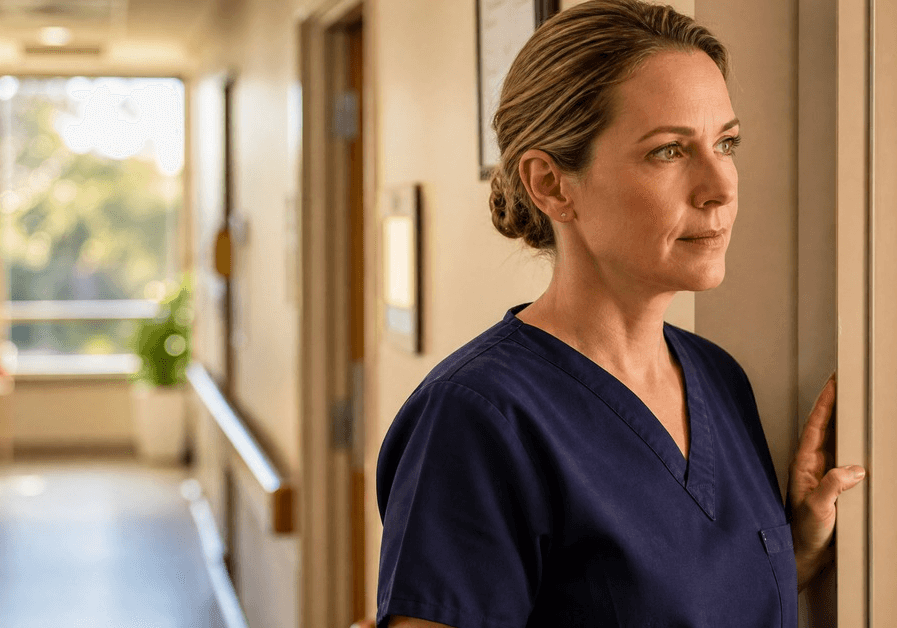
Clinical Intuition in Nursing: What It Is, How It Develops, and Why It Belongs in Your Portfolio
The Thing Experienced Nurses Know That They Cannot Always Explain
Every experienced nurse has had this experience: a patient who looks fine by every measurable parameter, but something is wrong. A clinical presentation that reads as routine, but the nurse stays. A moment of certainty about a patient’s trajectory that precedes the objective data that would explain it.
This is not imagination. It is not unprofessional. It is one of the most sophisticated and most undervalued competencies in clinical nursing — and it has a name, a mechanism, and a substantial research base.
|
When an experienced nurse says, ‘I just knew’, they are not describing a feeling. They are describing a pattern-matching process so rapid and so well-trained that it produces certainty before it produces explanation.
What Clinical Intuition in Nursing Actually Is
Clinical intuition in nursing has been researched extensively since Patricia Benner’s foundational work in the 1980s on novice-to-expert clinical development. It is now understood as a form of expert pattern recognition — the ability to rapidly identify clinical situations as instances of known patterns, without the conscious step-by-step processing that novice nurses use.
The mechanism is well-established in cognitive science: the brain stores thousands of clinical encounters as patterns. When a new patient presentation activates features consistent with a stored pattern — not matching it exactly, but resonating — the brain produces a sense of knowing before the explicit reasoning process has completed.
This is not the same as guessing. It is experienced pattern matching. And it is consistently accurate at rates that explicit reasoning in real-time clinical settings cannot match, for experienced practitioners.
How Clinical Intuition Develops in Nurses
Volume of Clinical Exposure
Clinical intuition develops through cumulative patient exposure — specifically, through encounters that are rich enough in detail that patterns are laid down with sufficient specificity to be useful. Hospital nursing, despite its pressures, produces rapid pattern development through the sheer density and diversity of clinical presentations.
Reflective Processing of Clinical Encounters
Volume alone is not sufficient. Nurses who reflect on clinical encounters — particularly ones where outcomes surprised them, or where their intuition was confirmed or disconfirmed by subsequent data — develop pattern libraries that are more refined and more reliable.
Cross-Specialty Clinical Experience
Nurses with experience across multiple clinical settings and patient populations develop broader pattern libraries and more flexible intuition than deeply siloed specialists. The nurse who has worked medical, surgical, and emergency settings brings a comparative database that enriches pattern recognition across contexts.
The Relationship Between Clinical Intuition and Evidence-Based Practice
Clinical intuition is not an alternative to evidence-based practice. It is evidence-based practice operating at a different speed. The pattern the experienced nurse is matching was built from real clinical outcomes — from encounters where the pattern was present and the outcome confirmed or disconfirmed its significance.
The appropriate relationship between intuition and evidence in clinical practice is: intuitive knowing warrants investigation, not automatic action. When something tells you a patient is deteriorating, you investigate. The feeling is data. It warrants data collection.
Why Clinical Intuition Belongs in Your Nursing Portfolio
Most nurses describe their clinical expertise in terms that are easily measurable: qualifications, years of experience, skills certificates, procedural competencies. Clinical intuition — one of the competencies that most clearly distinguishes an experienced nurse from a skilled new graduate — is almost never articulated in professional portfolios or career narratives.
Communicating clinical intuition in a portfolio or interview does not mean using the word ‘intuition’ — it means describing specific clinical experiences where advanced pattern recognition produced outcomes that explicit assessment alone would not have.
Example: ‘I identified a patient’s early deterioration during a routine observation round, despite normal vital signs, based on subtle changes in color, affect, and respiratory pattern that I recognized as consistent with impending sepsis. The subsequent assessment and escalation prevented an ICU transfer.’ This is clinical intuition described in portfolio language.
Frequently Asked Questions
Is clinical intuition reliable enough to act on?
Experienced clinical intuition is reliable enough to warrant investigation, escalation, and increased monitoring. It is not reliable enough to justify clinical action without supporting objective assessment. The appropriate response to strong clinical intuition is enhanced assessment — not bypass of standard clinical protocols.
Do some nurses develop clinical intuition faster than others?
Yes. The rate of clinical intuition development is affected by volume and diversity of clinical exposure, quality of reflection on clinical encounters, quality of supervision and feedback during formative years, and the degree to which the nurse actively attends to clinical subtleties rather than focusing only on measurable parameters.
How do I talk about clinical intuition in a job interview without sounding unscientific?
Frame it as expert pattern recognition and describe a specific clinical instance. ‘I have developed strong clinical early warning recognition through extensive acute care experience — I am often able to identify subtle deterioration before it becomes measurable’ is both accurate and professionally appropriate.


The Hive Nursing Development © 2026 | About Us | Contact Us | Privacy Policy | Terms & Conditions