






Welcome to The Hive Experience, where nurses come to recharge, reconnect, and reignite their passion.
We specialise in immersive retreats and professional events designed exclusively for nurses and midwives.
Whether you're seeking rest, reflection, or career rejuvenation, we create spaces that nourish your wellbeing and elevate your professional journey.
As the sister company to The Hive Nursing Development, we combine decades of clinical leadership, mentoring expertise, and a deep love for the profession to deliver unforgettable, CPD-accredited experiences with purpose.
Burnout prevention
Career clarity
Reflective wellness
CPD hours
Join a movement that celebrates, supports, and uplifts the heart of healthcare, you.


What we offer

Career Clarity
Gain fresh perspective, mentorship, and guided activities to help you reflect on your goals, map your next steps, and leave with a personalised plan to grow your nursing career with purpose.

Burnout Prevention
Our events are designed to help you pause, reset, and reconnect with yourself — reducing stress and providing practical strategies to prevent burnout and build sustainable wellbeing in your nursing career.

CPD Hours
All of our retreats and events are CPD-recognised, giving you the opportunity to invest in your personal and professional growth while meeting AHPRA requirements.

Presented by Lisa Lucas
Founder & CEO @ The Hive Nursing Development
Lisa is an award-winning nurse leader and the visionary behind The Hive Experience and The Hive Development.
With over 20 years of experience across emergency, surgical, oncology, cardiology, and retrieval services, Lisa brings deep insight and compassion to her work.
A passionate mentor and former Nursing Executive level leader, Lisa created Recharge & Refocus to help nurses align their careers with purpose, prevent burnout, and step into leadership with clarity and confidence.
Our Retreats
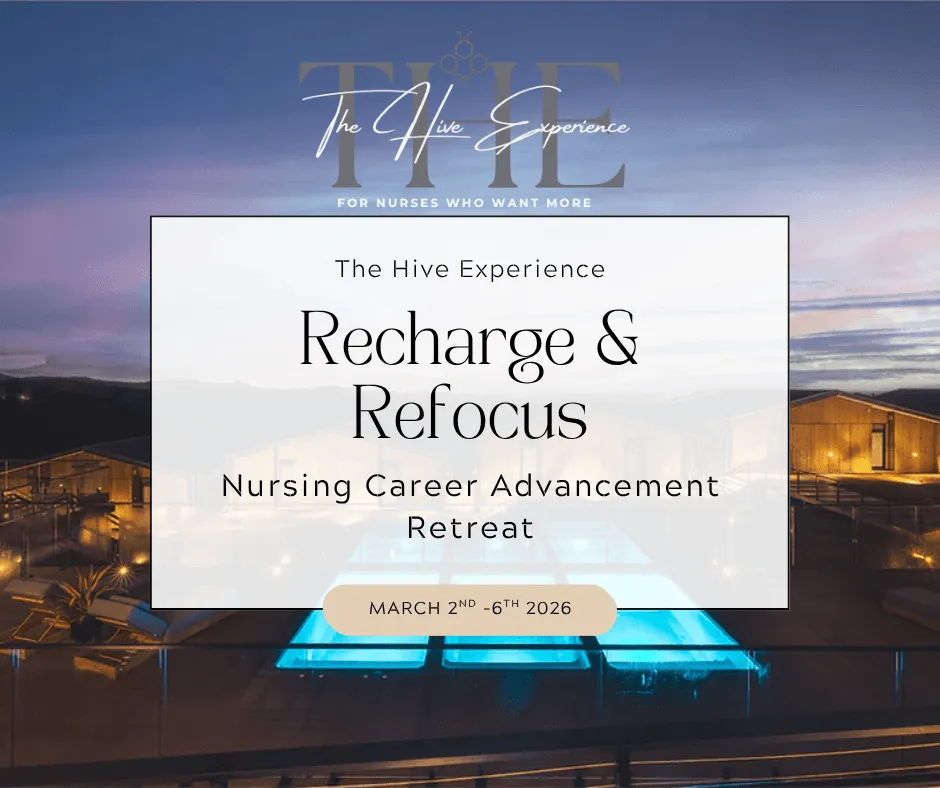
Reset & Refocus - Tallebudgerra QLD
An all-inclusive retreat for nurses and midwives seeking rest, clarity and career growth.
Includes:
5 days / 4 nights luxury accommodation at Eco Retreat, Tallebudgera
All meals crafted by an on-site executive chef (incl. dietary needs)
Full retreat program facilitated by award-winning nurse leaders
Personalised career planning & recruitment preparation workshops
Reflective wellness sessions including:
Guided yoga
Hot & cold plunge therapy
Sauna access
Scenic nature walks
Access to a fully equipped gym
24 CPD hours (AHPRA compliant)
Access to exclusive career resources & take-home workbook
Networking dinners and guest speaker sessions
Retreat gift pack
Follow-up group coaching call
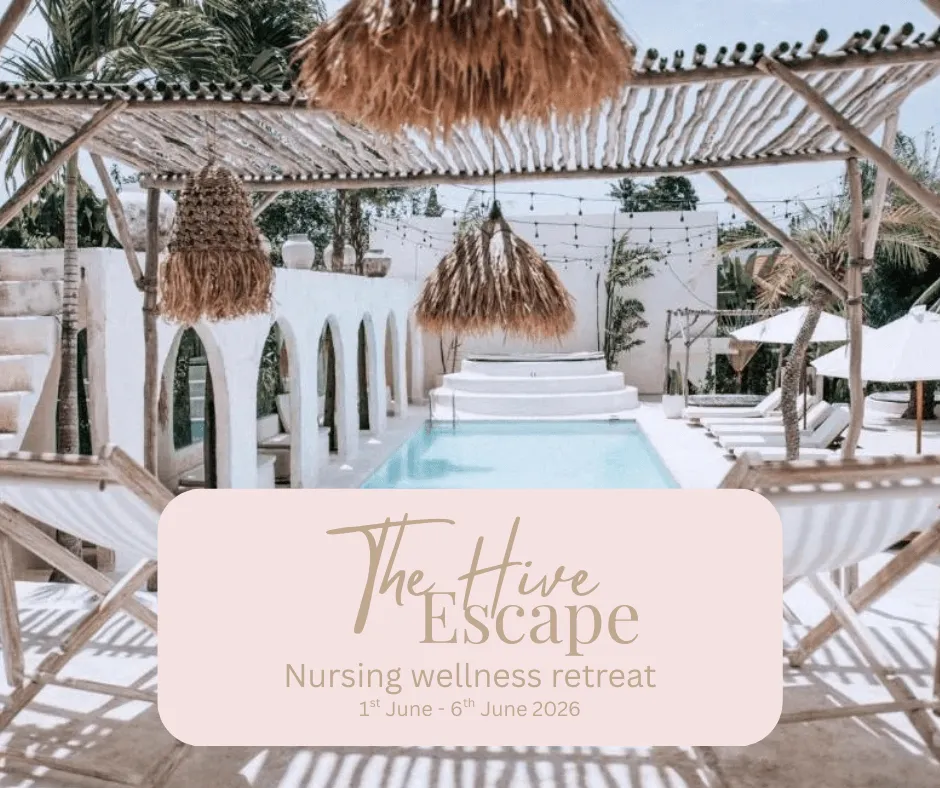
The Hive Escape - Bali
An all-inclusive luxury retreat for nurses and midwives seeking deep rest, emotional recovery and sustainable wellbeing.
5 nights luxury accommodation at Hotel Sages, Bali
Daily yoga and mindfulness sessions
A Bali Spa treatment to relax
Nurse-led wellbeing workshops
Daily nourishing meals (all dietary needs catered)
Cultural immersion experiences
Private airport transfers and on-site coordination
The Hive Cambodia
An all-inclusive Leadership immersive experience that combines humanitarian work with leadership development.
9 nights 5 star luxury accommodation
Volunteer house build with our partners Global Transition
Foundation, to build a house for local families
International flights
Award winning Nurse leader facilitated workshops / immersive sessions
Daily breakfast
Cultural immersion experiences
Private airport transfers

Other events from The Hive Experience...
Career Alignment & Advancement Program
Build clarity, confidence, and a grounded path forward.
2nd March - 5th March (9am - 5pm daily)
What’s Included:
3 full days of guided career clarity and alignment work
Values, identity, and decision-making frameworks
Clear differentiation between burnout and misalignment
Exploration of realistic growth and advancement pathways
Confidence built through evidence, not hype
Practical self-advocacy and boundary-setting tools
A grounded 90-day career action plan
Morning tea, lunch and afternoon tea included
24hrs of CPD with certificate of evidence
Highlights From The Blog

How to Assess a Nursing Workplace Before You Accept the Job
The Interview Is a Two-Way Process
Most nurses approach job interviews as auditions — focused entirely on performing well enough to receive an offer. This framing costs them.
The organization is assessing whether you are right for them. You should be equally actively assessing whether they are right for you. The cost of joining the wrong workplace — in wellbeing, in burnout risk, in career trajectory — substantially exceeds the cost of taking longer to find the right one.
This article gives you a practical, specific framework for assessing a nursing workplace before you commit to it.
Before the Interview: Research You Can Do From the Outside
Check AHPRA and accreditation records
Health service accreditation status is publicly available. A facility with recent or current compliance issues is a facility under structural pressure, which typically flows directly to nursing working conditions. This is not disqualifying information, but it is context.
Talk to nurses who have worked there
LinkedIn, professional networks, and direct outreach to former employees provide the clearest picture of workplace reality available. Ask specifically: what was the management culture like, what made you leave, and would you recommend it to a nurse you respected? People who have left a workplace are typically candid.
Review the enterprise agreement and recent bargaining history
How an organization behaves in enterprise bargaining reveals its values more clearly than any recruitment pitch. Prolonged disputes, minimal increases, or patterns of cutting conditions are indicators of an employer’s genuine priorities.
During the Interview: What to Watch and What to Ask
Observe before you speak
How is the reception or waiting area staffed? Are nurses you observe moving with engagement or with exhaustion? What is the tone of conversations you can hear? These observations take thirty seconds and tell you more than most interview questions.
Ask specifically about staffing and acuity
‘What is the typical nurse-to-patient ratio on this unit during a day shift, and how often is this maintained?’ is a question that produces one of two responses: a direct, confident answer, or evasion. The evasion is the data.
Ask about how mistakes are handled
‘Can you walk me through how the team would typically respond when a clinical error or near miss is identified?’ This question reveals the psychological safety culture of the unit more directly than any values statement.
Ask about what happened to the last person in this role
Organizations rarely volunteer this information, and most nurses do not ask. The answer — promotion, transfer, resignation, extended leave — is directly relevant to your decision. A role with high recent turnover is a role worth understanding more deeply before accepting.
Ask about professional development investment
‘What does the organization typically invest in for nurses at this level in terms of professional development, and what would be available to me specifically?’ The answer tells you whether the organisation sees nursing staff as an asset to develop or a resource to consume.
The Red Flags That Are Easy to Miss
-
**The interviewer speaks about nursing shortages and team pressure as though they are a permanent given rather than a problem to be solved — this normalizes inadequate conditions
-
**Vague or dismissive answers to direct questions about staffing ratios or workload
-
**No clear orientation or support structure for new staff
-
**The role has been vacant for an unusually long time, or has had multiple occupants recently
-
**The interviewer emphasizes how much you will learn, as a substitution for concrete answers about what will be provided
-
**Multiple members of the team look visibly depleted
|
A workplace that cannot answer ‘what is your typical nurse-to-patient ratio?’ directly is a workplace that knows the answer is a problem.
After the Interview: The Debrief With Yourself
Before you receive or respond to an offer, spend twenty minutes with these questions:
-
**Did the environment I observed today match the culture being described to me?
-
**Were my direct questions answered directly, or deflected?
-
**Do the nurses I observed look like people in a sustainable professional environment?
-
**Would I respect the manager I met as a leader, or would I be managing up constantly from day one?
-
**Does the vision this organisation described for the role align with the direction I am actually building toward?
Your gut response to these questions carries real information. Not because instinct is infallible, but because the observations that feed it are specific and direct in ways that the formal interview content often is not.
Frequently Asked Questions
s it appropriate to ask about why the position is vacant?
Yes, and the answer is useful. Roles that are new, created by restructure, or vacated by promotion tell a different story from roles that have had three occupants in eighteen months. You are entitled to ask, and a good employer will answer directly.
What if I need the job and cannot afford to be selective?
Even in constrained circumstances, the assessment framework helps you understand what you are entering, prepare for the challenges ahead, and make the most informed decision available to you. Needing a job does not require suspending judgment — it requires weighing it realistically.
What are the most reliable signs of a genuinely good nursing workplace?
Specific, confident answers to direct questions about staffing and support. Clear orientation structures. Evidence that the manager has been in the role for some time. Nurses who look engaged rather than depleted. Honest acknowledgment of challenges alongside genuine description of supports. These are not guarantees — but they are meaningfully different from their absence.
Join The Hive email community to access career navigation resources for nurses making significant professional decisions. Visitthehivedevelopment.com.au


The Hive Nursing Development © 2026 | About Us | Contact Us | Privacy Policy | Terms & Conditions